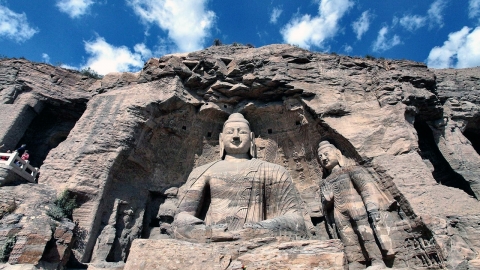
providencemarianwood.org – The Yungang Grottoes, located near Datong in Shanxi Province, China, are a magnificent testament to ancient Buddhist art and architecture. Carved into the sandstone cliffs of the Wuzhou Mountain, these grottoes are one of the finest examples of rock-cut architecture and hold immense historical, cultural, and religious significance.
Historical Background
The Yungang Grottoes were constructed during the Northern Wei Dynasty (386-534 AD) and represent a crucial period in the development of Chinese Buddhist art. The project began around 460 AD under the patronage of Emperor Wencheng and continued for several decades. The grottoes were created to promote Buddhism and demonstrate the emperor’s devotion to the faith.
Architectural and Artistic Features
Structure and Layout
The Yungang Grottoes comprise a complex of 252 caves and over 51,000 statues, stretching over a kilometer along the cliffs. These caves vary in size and complexity, with some featuring small niches and others housing enormous statues. The artistry is characterized by a blend of Indian, Persian, and Central Asian influences, reflecting the cultural exchanges along the Silk Road.
Iconography and Sculptures
The sculptures at Yungang depict various aspects of Buddhist teachings and narratives. Central to these is the figure of the Buddha, often portrayed in serene meditation poses. The statues range from a few centimeters to grand figures over 17 meters tall. Intricate carvings of bodhisattvas, celestial beings, and mythical creatures adorn the walls and ceilings, demonstrating the skill and creativity of ancient artisans.
Cultural and Religious Significance
The Yungang Grottoes are more than just artistic masterpieces; they are a testament to the spread and evolution of Buddhism in China. The site reflects the syncretism of Buddhist iconography with local traditions and beliefs, illustrating the adaptability and resilience of the religion. For centuries, the grottoes have been a place of pilgrimage, attracting devotees and scholars alike.
Preservation and UNESCO Recognition
In 2001, the Yungang Grottoes were designated a UNESCO World Heritage Site, acknowledging their outstanding universal value. Preservation efforts have been undertaken to protect the site from environmental and human-induced threats. These include stabilization of the cliffs, restoration of damaged sculptures, and measures to control tourism impacts.
Modern-Day Relevance
Today, the Yungang Grottoes continue to captivate visitors with their awe-inspiring beauty and historical depth. They offer valuable insights into the artistic and cultural landscape of ancient China and serve as a reminder of the enduring legacy of Buddhism. The site is an essential resource for researchers studying the intersection of art, religion, and history.
Conclusion
The Yungang Grottoes stand as a monumental achievement in the realm of religious art and architecture. Their grandeur and intricate detailing speak volumes about the devotion and craftsmanship of the people who created them. As we explore this ancient site, we gain a deeper appreciation for the cultural and spiritual heritage that has shaped Chinese civilization over the centuries.